














































Hello Folks!
I’m Ornellius, UX Lead at Vodafone Idea.
Welcome to season one, episode three of <beta> than ever, your ultimate weekly product design guide. In today’s episode, we’ll explore some of the most fascinating tech and its impact on product design as a practice.
Wonder what the future will look like? Let me paint you a picture.
The year is 2030. You’re walking on the street and feel a sense of dizziness. The heat has gotten to you. You need to get yourself a electrolyte drink to give you energy. Luckily, you’ve got smart glasses on. You call out to your smart assistant seated in your glasses and say ”guide me to the nearest medical store where I can find Enerzal” (Enerzal is a electrolyte drink here in India). Your assistant instantly checks for the closest medical store, checks ONDC for availability of product, and gives you realtime navigation assistance through your smart glasses.
A few years later, glasses might not even be needed. Neural connectors to our mind would automatically know our physical state and alert us of a problem before it starts to occur.
The future of tech is fascinating! From smart glasses, to ai assistants, to neural connectors, we are slowly progressing to our next evolution cycle. But will all of this really happen? And what does this mean for product design? Here’s what I think
1. Say Goodbye to Your Pocket Brick (aka Smartphone)
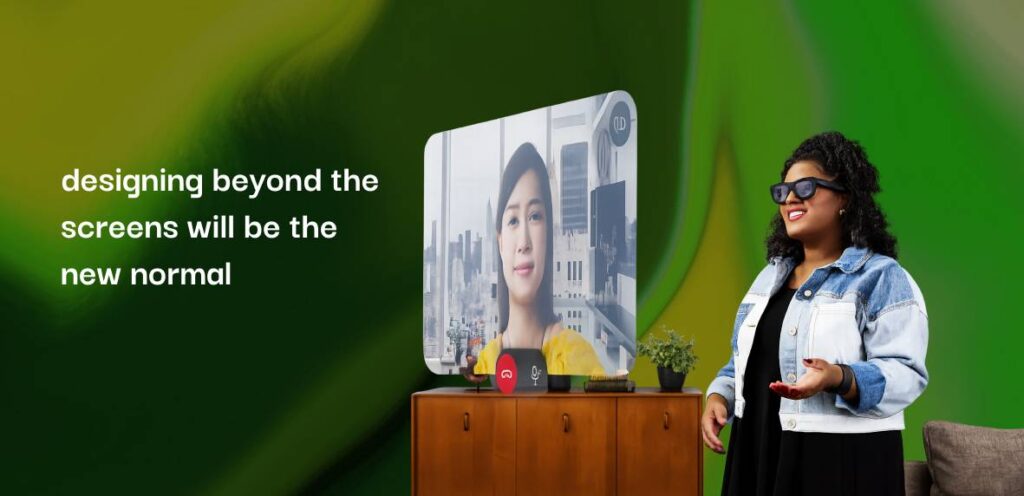
Alright, let’s be real. We’re all kinda over our phones, right? They’re like that clingy friend who always wants attention. Take it out, unlock it, find the app, blah blah blah. It’s getting old, fast. Recently, many advanced glasses have been launched that almost replaces phones, even computers. Check out Orion by Meta, they’ve only just scratched the surface of what is possible with eyewear tech.
What does this mean for designers:
- Gesture is the New Touch: Forget tapping on screens. We’re talking Minority Report-style hand waving. Hand gestures to take pictures, text, move things around, scroll. Wait, why are we still doing scrolls while wearing immersive glasses? Well, people are very used to it right now, we’ll have to slowly ease people out of it, if needed.
- Invisible UI is the New Black: Designing stuff that’s always there but never in your face. It’s like having a digital butler – always ready, never annoying. This involves slimming the line between reel and reality. Imagine a hologram of your friend sitting besides you while talking to them even when they are physically miles away.
- Context is King: Imagine apps that know what you need before you do. Creepy? Maybe. Awesome? Definitely.
Real Talk:
- Picture this: You’re designing a messaging app that doesn’t need a phone. Maybe it’s a funky bracelet that lets you chat by just thinking about your friend. Mind-blowing, right?
2. AI: Your New Bestie
We’re drowning in info, folks. Our brains are awesome, but they’ve got limits. Enter AI – not to replace us (phew!), but to give our creativity some serious superpowers.
What does this mean for designers:
- AI Sidekick: AI is like the Robin to your Batman. Batteling things that you don’t want physically or even mentally get into. AI takes on all menial tasks. Gone are the days where our parents would quiz us on general knowledge. AI will support us on every beck and call.
- Hyper-Personalized Everything: Interfaces that adapt to users like chameleons. One app, infinite faces. It’s like anderoid customization on steroids.
- Predictive UX: Designing stuff that knows what users want before they do.
- Ethical AI Design: We have the exciting opportunity to shape AI’s role in design. By focusing on ethical AI practices, we’re not just creating better products; we’re setting the standard for responsible innovation across the industry.
The Cool Part:
Imagine a design tool that’s like a mind-reader. You think of a concept, and bam! It creates a whole design system. Your job? Being the creative genius who guides the AI. We’re leveling up from pixel-pushers to AI whisperers!
3. Neural what now? Yep, mind-enhancers are coming
Okay, this is where it gets really sci-fi. Neural connectivity – aka your brain talking directly to the internet. Welcome to the Matrix, we’re all Neo here. No more fat-fingering your thoughts into a tiny keyboard!
What does this mean for designers:
- Empathy Amplified: Imagine designing experiences that respond not just to conscious commands, but to emotions and subconscious needs. We’re talking about technology that can comfort you when you’re sad before you even realize you need cheering up!
- Accessibility Revolution: For individuals with physical disabilities, neural interfaces could be life-changing. We have the opportunity to design experiences that level the playing field in unprecedented ways.
- Learning and Creativity Supercharged: Think about educational experiences where complex concepts can be understood intuitively, or creative tools that can translate your imagination directly into digital art. The potential for enhancing human capability is enormous!
- Emotional Rollercoaster Design: Creating stuff that vibes with your feelings. Happy? Sad? Hangry? The UI knows and adapts.
- Beyond Visuals: We’re not just eye-candy creators anymore. We’re designing for all the senses. We’ll finally be able to have an impact on smell. Imagine smelling the food while watching a “how to” recipe video.
Mind = Blown:
Picture designing an online shopping experience where you browse with your mind, “feel” products virtually, and buy with a thought. It’s like telepathic window shopping!
Putting It All Together: The Design Revolution
All this tech is converging to create a world where the line between digital and physical is blurrier than your vision after a Netflix binge. It’s a whole new ball game for us designers.
The Big Questions We’ll Be Tackling:
- Ethical Minefield: With great power comes… a ton of ethical dilemmas. We’re the new moral guardians of the digital realm.
- Design for Everyone: How do we make sure grandma can use thought-controlled interfaces too?
- Mind-Reading, But Make It Secure: Designing the Fort Knox of brain-data protection.
- Seamless or Bust: Creating tech that blends into life like a ninja, not screaming for attention like a toddler.
Wrapping It Up
As phones become museum pieces, AI turns us into super-designers, and we start creating with our thoughts, our job is going to be more exciting than ever.
Sure, it’s a bit scary. But come on, when has “comfortable” ever been fun? We’re about to reshape how humans and tech interact.

Hello Folks!
I’m Ornellius, UX Lead at Vodafone Idea.
Welcome to season one, episode three of <beta> than ever, your ultimate weekly product design guide. In today’s episode, we’ll explore some of the most fascinating tech and its impact on product design as a practice.
Wonder what the future will look like? Let me paint you a picture.
The year is 2030. You’re walking on the street and feel a sense of dizziness. The heat has gotten to you. You need to get yourself a electrolyte drink to give you energy. Luckily, you’ve got smart glasses on. You call out to your smart assistant seated in your glasses and say ”guide me to the nearest medical store where I can find Enerzal” (Enerzal is a electrolyte drink here in India). Your assistant instantly checks for the closest medical store, checks ONDC for availability of product, and gives you realtime navigation assistance through your smart glasses.
A few years later, glasses might not even be needed. Neural connectors to our mind would automatically know our physical state and alert us of a problem before it starts to occur.
The future of tech is fascinating! From smart glasses, to ai assistants, to neural connectors, we are slowly progressing to our next evolution cycle. But will all of this really happen? And what does this mean for product design? Here’s what I think
1. Say Goodbye to Your Pocket Brick (aka Smartphone)
Alright, let’s be real. We’re all kinda over our phones, right? They’re like that clingy friend who always wants attention. Take it out, unlock it, find the app, blah blah blah. It’s getting old, fast. Recently, many advanced glasses have been launched that almost replaces phones, even computers. Check out Orion by Meta, they’ve only just scratched the surface of what is possible with eyewear tech.
What does this mean for designers:
- Gesture is the New Touch: Forget tapping on screens. We’re talking Minority Report-style hand waving. Hand gestures to take pictures, text, move things around, scroll. Wait, why are we still doing scrolls while wearing immersive glasses? Well, people are very used to it right now, we’ll have to slowly ease people out of it, if needed.
- Invisible UI is the New Black: Designing stuff that’s always there but never in your face. It’s like having a digital butler – always ready, never annoying. This involves slimming the line between reel and reality. Imagine a hologram of your friend sitting besides you while talking to them even when they are physically miles away.
- Context is King: Imagine apps that know what you need before you do. Creepy? Maybe. Awesome? Definitely.
Real Talk:
- Picture this: You’re designing a messaging app that doesn’t need a phone. Maybe it’s a funky bracelet that lets you chat by just thinking about your friend. Mind-blowing, right?
2. AI: Your New Bestie
We’re drowning in info, folks. Our brains are awesome, but they’ve got limits. Enter AI – not to replace us (phew!), but to give our creativity some serious superpowers.
What does this mean for designers:
- AI Sidekick: AI is like the Robin to your Batman. Batteling things that you don’t want physically or even mentally get into. AI takes on all menial tasks. Gone are the days where our parents would quiz us on general knowledge. AI will support us on every beck and call.
- Hyper-Personalized Everything: Interfaces that adapt to users like chameleons. One app, infinite faces. It’s like anderoid customization on steroids.
- Predictive UX: Designing stuff that knows what users want before they do.
- Ethical AI Design: We have the exciting opportunity to shape AI’s role in design. By focusing on ethical AI practices, we’re not just creating better products; we’re setting the standard for responsible innovation across the industry.
The Cool Part:
Imagine a design tool that’s like a mind-reader. You think of a concept, and bam! It creates a whole design system. Your job? Being the creative genius who guides the AI. We’re leveling up from pixel-pushers to AI whisperers!
3. Neural what now? Yep, mind-enhancers are coming
Okay, this is where it gets really sci-fi. Neural connectivity – aka your brain talking directly to the internet. Welcome to the Matrix, we’re all Neo here. No more fat-fingering your thoughts into a tiny keyboard!
What does this mean for designers:
- Empathy Amplified: Imagine designing experiences that respond not just to conscious commands, but to emotions and subconscious needs. We’re talking about technology that can comfort you when you’re sad before you even realize you need cheering up!
- Accessibility Revolution: For individuals with physical disabilities, neural interfaces could be life-changing. We have the opportunity to design experiences that level the playing field in unprecedented ways.
- Learning and Creativity Supercharged: Think about educational experiences where complex concepts can be understood intuitively, or creative tools that can translate your imagination directly into digital art. The potential for enhancing human capability is enormous!
- Emotional Rollercoaster Design: Creating stuff that vibes with your feelings. Happy? Sad? Hangry? The UI knows and adapts.
- Beyond Visuals: We’re not just eye-candy creators anymore. We’re designing for all the senses. We’ll finally be able to have an impact on smell. Imagine smelling the food while watching a “how to” recipe video.
Mind = Blown:
Picture designing an online shopping experience where you browse with your mind, “feel” products virtually, and buy with a thought. It’s like telepathic window shopping!
Putting It All Together: The Design Revolution
All this tech is converging to create a world where the line between digital and physical is blurrier than your vision after a Netflix binge. It’s a whole new ball game for us designers.
The Big Questions We’ll Be Tackling:
- Ethical Minefield: With great power comes… a ton of ethical dilemmas. We’re the new moral guardians of the digital realm.
- Design for Everyone: How do we make sure grandma can use thought-controlled interfaces too?
- Mind-Reading, But Make It Secure: Designing the Fort Knox of brain-data protection.
- Seamless or Bust: Creating tech that blends into life like a ninja, not screaming for attention like a toddler.
Wrapping It Up
As phones become museum pieces, AI turns us into super-designers, and we start creating with our thoughts, our job is going to be more exciting than ever.
Sure, it’s a bit scary. But come on, when has “comfortable” ever been fun? We’re about to reshape how humans and tech interact.